
Elham & Farshad - A Journey of Purpose
ACT Volunteers - Los Angeles, USA
Early Seeds of Kindness in Iran
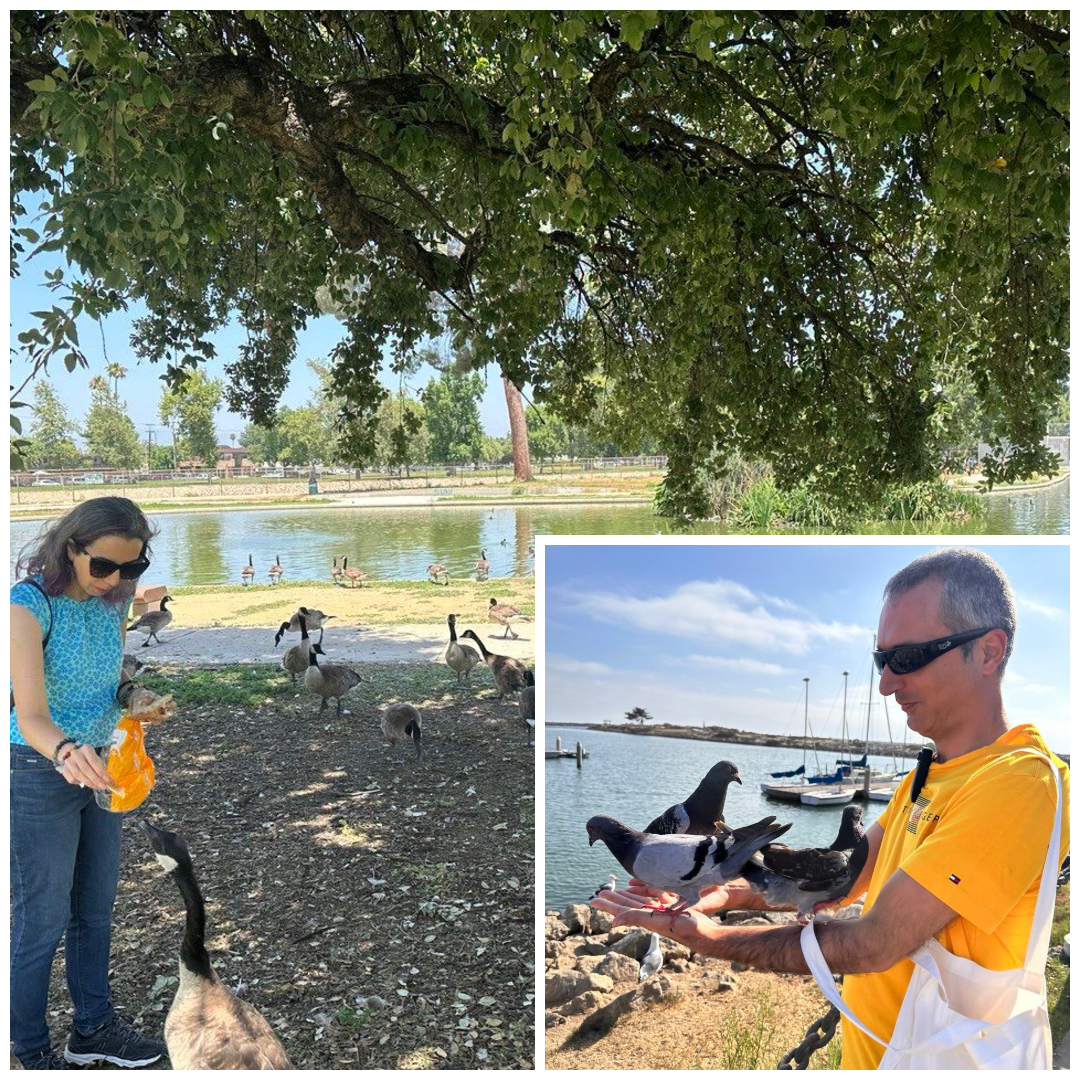
Both of us were born and raised in Iran, where economic hardship was common. Still, helping others was something we were always drawn to. Visiting orphanages, supporting infants and young children, spending time with them, and feeding stray animals—these acts came naturally to us. We didn’t overthink them; we simply responded to the needs around us. It became one of the most meaningful experiences of our lives.
Meeting Mohanji, Finding Focus From Pain to Purpose
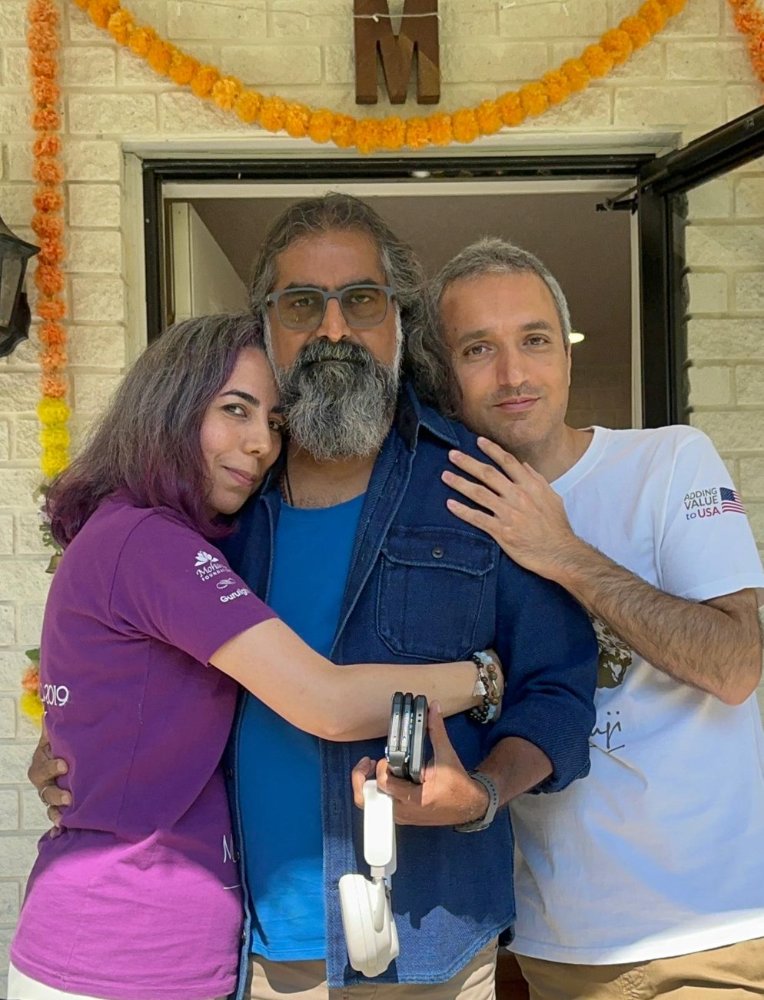
We met Mohanji during one of the most difficult times in our lives—a period when everything felt heavy and hopeless. But from that moment on, things began to change. We didn’t just hear his words—we lived them. His presence, authenticity, and example of selfless service inspired us deeply, especially through the simple yet profound act of feeding those in need.
After connecting with Mohanji, we got involved with the ACT Foundation. We had first met him in 2014, when he visited Los Angeles in September. But for the next four years, we didn’t have the chance to meet him again. Still, we stayed connected online as much as we could—attending the occasional Zoom session, reading blogs, and doing meditations on our own.
In 2018, we finally joined him for our first retreat, which marked a turning point in our lives. After that, we had the blessing of meeting him a few more times. Eventually, both of us became Acharyas by his grace. From that point on, our journey became much more focused and purposeful.
A New Chapter—and a Familiar Visitor
We moved into a new home in November. Not long after, a cat began visiting—waiting quietly to be fed, reminding us of our past experiences. Life truly comes full circle. Sometimes, he even looks at us as if to say, “Do I need to remind you it’s dinner time?”
“Our new feline friend—waiting patiently to be served with dignity.”
The Cat with the Holy “M”
I’ve always felt a strong connection with cats. Even when I lived in Iran, we once rescued a cat that had gotten trapped in a pipe. I’ve always felt that bond.
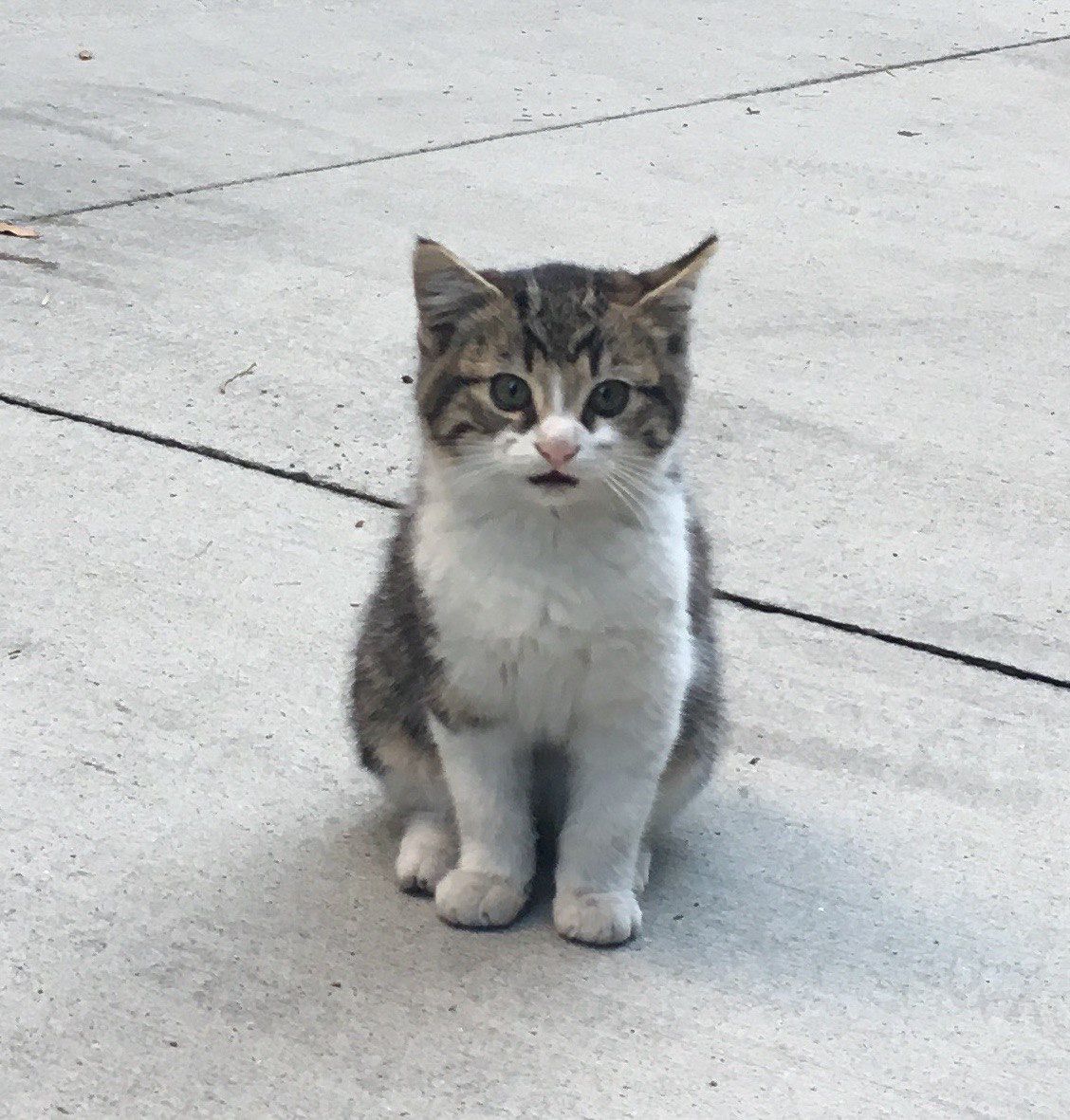
In 2018, one day we came across a small kitten in the parking area of our building. He walked right up to us and sat down so calmly, as if politely asking for food. It was such a touching moment.
He had a striking “M” on his forehead and approached us calmly. We started feeding him daily. His mother was also there, and we ended up feeding both of them.
It was interesting because this little cat had a very distinct "M" mark on his forehead. I started feeding him every day since he was just a baby and needed more food. At that time, I was mostly at home, so I began feeding him twice a day. Farshad would also care for him—brushing him, cleaning him—even though he was technically a stray. But we treated him like he was our own.
Eventually, even the people in our building began to love and respect him. He would walk around like a lion, with such confidence—as if he were royalty. For a long time, I thought he was a girl, and we kept referring to him that way.
When we showed Mohanji the cat’s photo, he smiled and said, “He’s my man… a holy M. He’s from my people.” That moment changed everything.
“The cat with the holy ‘M’—a symbol of grace and connection.”
That moment really struck us. We realized there was something deeper going on. Interestingly, Farshad had never been particularly connected to cats before, but this cat melted his heart. We loved him so much. Every day, we would go down to the parking lot just to play with him—sometimes for an hour or two. We cared for him deeply.
More Cats, More Blessings
We really loved him. Then, after some time, his mom had more kittens—three more. Of course, we began feeding them as well.
We continued playing with the kittens, but one by one, they began to disappear—some were taken, and some got lost. Their mother had more litters over time, and eventually, the building manager called a shelter to come and take the cats. All of them were taken—except for the one with the holy “M” on his forehead. He stayed.
Eventually, the shelter did come back for him too. We were so worried. He had become very attached to us, and every time we went away and came back from a trip, he seemed deeply distressed. Even though he didn’t live inside our home, he felt our absence. We could see how depressed he had become.
When the shelter worker came—a kind girl—we explained to her how special he was and asked her to make sure he was taken care of well. She reassured us, saying they had already found a family for him. As difficult as it was to part with him, we trusted that he would be safe. Honestly, we saw it as Mohanji’s miracle. It happened just before the COVID pandemic began. If he hadn’t been taken in by a family at that time, things could’ve been much worse for him.
The family that adopted him treated him like royalty—taking him into their bedroom, feeding him by hand. It was beautiful. Then, just a week later, 13 more cats showed up in the neighborhood! Since then, we’ve been feeding them every single day.
So yes, now we have many cats in our lives. And in some way, we feel they’re all connected to Mohanji.
“Feeding the new feline arrivals—every life matters.”
Receiving More Than We Give
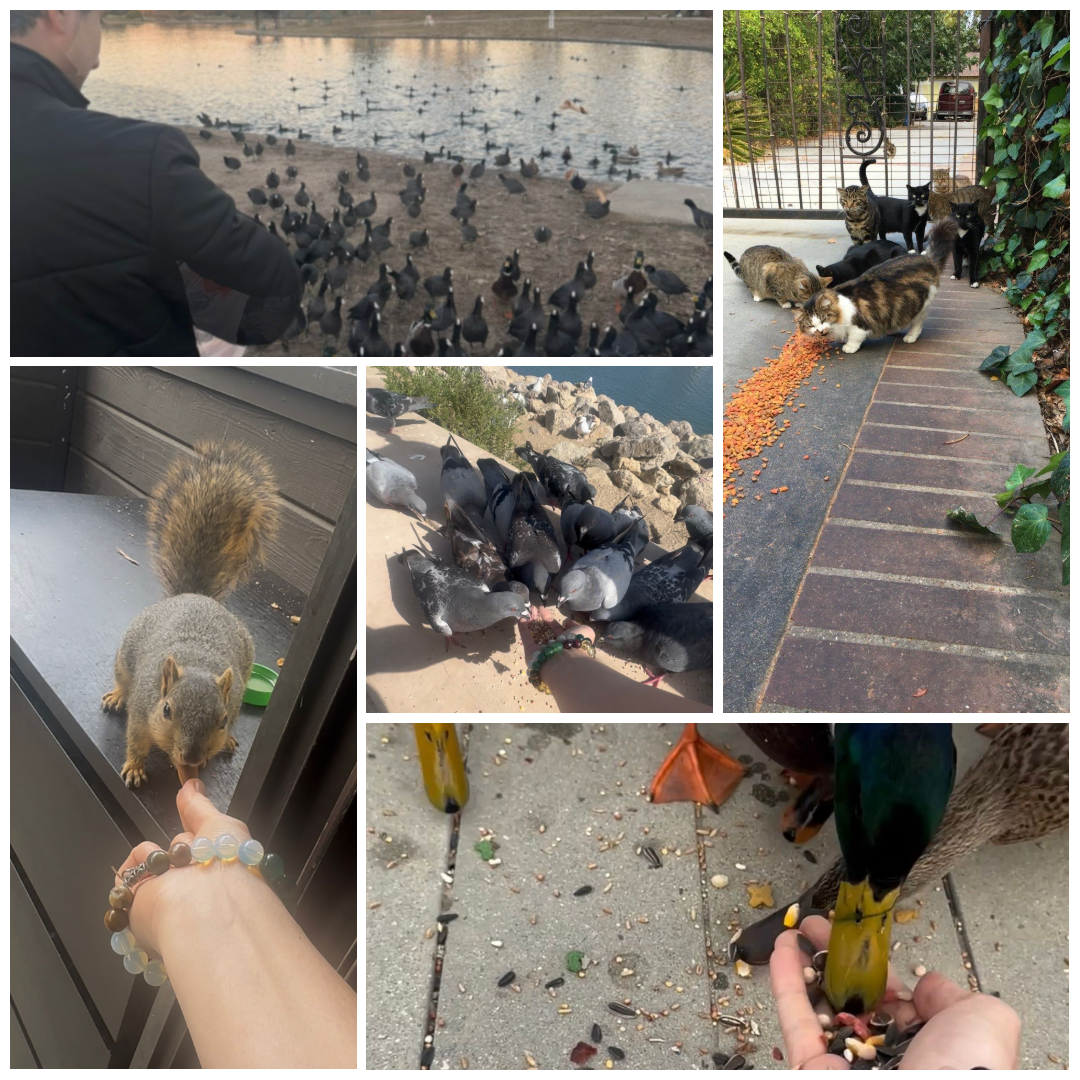
After connecting deeply with Mohanji, we began to understand that seva is not just about what we give. In fact, we are the ones who receive. Whether it's a person or an animal, the one accepting food is giving us a blessing by allowing us to serve.
After that, we started doing more acts of kindness—just little things here and there. In the beginning, it was very informal. We weren’t organized or structured. We’d just help someone in need when we saw them—whether it was a homeless person, a bird, or a stray cat.
Gradually, though, we felt the need around us growing. That’s when we realized we had to step up and do things more intentionally—and on a bigger scale.
Interestingly, once we committed to that, even the money we needed started to show up. It was as if the universe was supporting our intention.
We’re truly grateful for the seva we get to do each month. It’s all by grace—Mohanji’s grace. That’s the only way we can explain it.
Love in an Orphan’s Hug
After losing my mother in 2008, I was overwhelmed with grief. Something inside me said, “Go help a child.” I found an orphanage and began supporting a little boy, aged four. He had lost his father, and his stepfather didn’t accept him.
He was shy at first, but he slowly opened up—hugging me tightly, smiling, and sharing stories of pain with incredible strength. He helped heal me. Eventually, his mother transferred him without telling me, likely to protect him from attachment. Still, his love healed a wound I thought was permanent.
“The little boy who healed my grief with his hugs and innocence.”
A Life of Daily Seva
We now feed animals and birds daily—keeping food in our car, water in our yard, and compassion in our hearts. Even hummingbirds have joined our regular visitors. These acts of care are not obligations—they are daily spiritual practices.
“Even the hummingbirds stop by for a sip—every being is sacred.”
We see this daily act of feeding as a blessing. It’s not just a monthly seva (selfless service), but a daily spiritual practice. Being part of the ACT Foundation and following Mohanji’s guidance has given deeper meaning to our actions.
Mohanji’s teachings have shown us that hunger is universal—felt equally by all beings. Mohanji often says "when someone’s stomach is empty, food itself becomes God. You cannot talk about spiritual matters to someone who is hungry."
This realization changed our perspective on feeding animals. We no longer consider skipping a day just because it’s inconvenient. If we have the means and the time, we feel we must go—because those mouths are waiting, and God works through people.
Gratitude in the Eyes of the Homeless
The kindness of those living on the streets has deeply moved us. Despite having so little, they show immense gratitude for food, water, or even simple presence.
There’s something that always stays with us: how the people we serve—those living in extremely difficult conditions on the streets—are still so kind and grateful. Even when they have almost nothing, their hearts are full of gratitude when you give them food or support. That has been such a powerful lesson for us. Sometimes we have everything, yet we forget to feel grateful. But they remind us of the beauty in simple appreciation.
During Pitru Paksha, we couldn’t find anyone after two hours of searching. But then—outside a restaurant—two homeless souls appeared. One man opened a can of beans and began eating right there. It reminded us that seva finds you, even when you’re tired and uncertain.
“Serving food with love—sometimes the smallest act makes the biggest difference.”
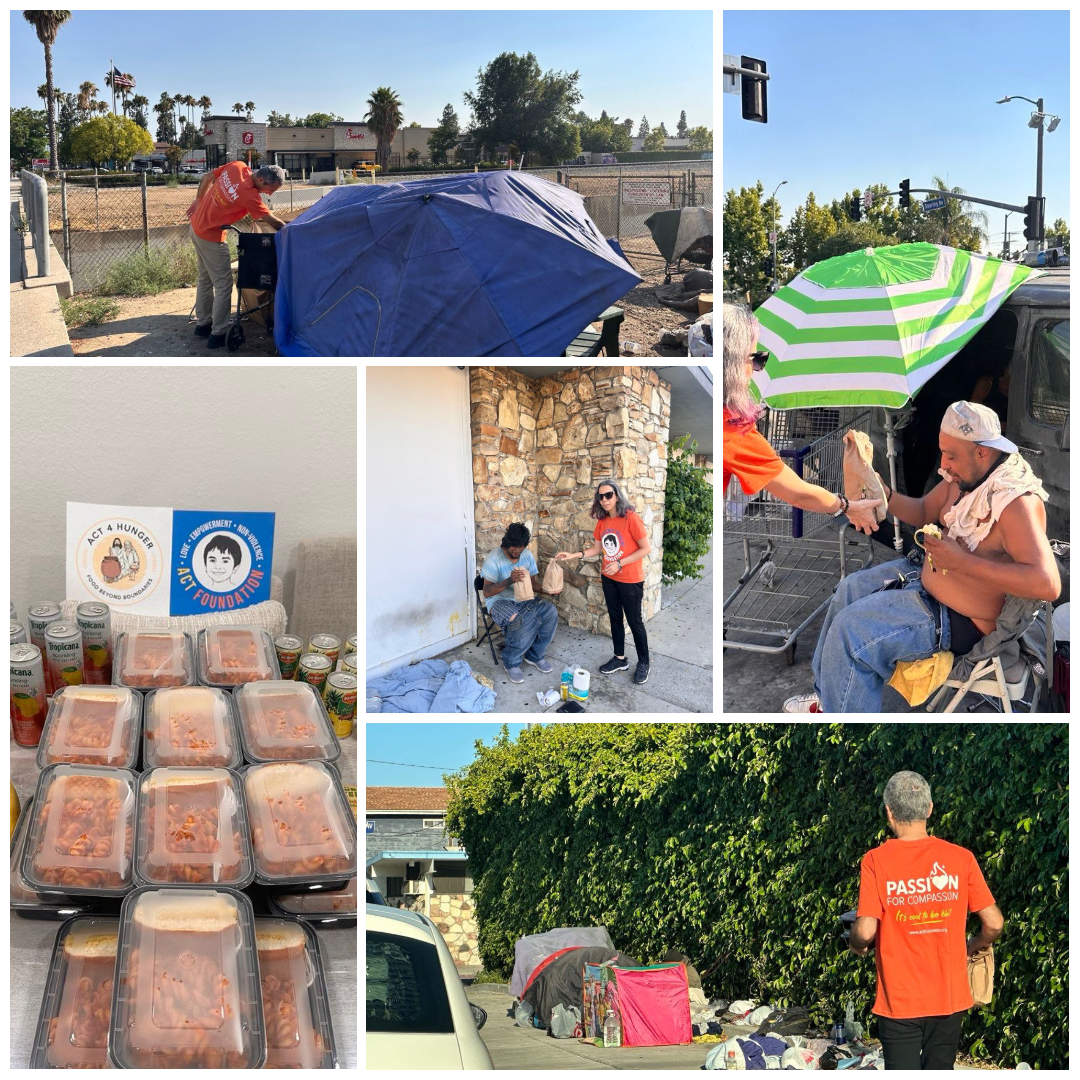
"It is every person's responsibility to share food with those who do not have it."
Challenges of Seva
During Pitru Paksha, we had planned a feeding drive. But finding the homeless has become very difficult. Instead of finding sustainable solutions, the city tends to keep pushing them from one place to another. People complain, and the authorities respond by moving the homeless somewhere else. This cycle keeps repeating, making it hard to reach them consistently.
Like the woman living by the railroad in 100°F heat. We wanted to give her a proper tent, but city policies prevent it.
“Food, water, and presence—what we can offer, we do with love.”
A Tube of Zinc—and a Prayer Answered
There is a lady—a homeless lady—we came to know just a few months ago. She’s living in a very horrible situation, without any tent, right next to the railroad. And in California, the heat this summer was, oh my God, just way too high.
Most of the time, it was above 90°F, but many days it was over 100°F. It was really burning out there. So, we tried to help as much as possible with daily food, water—anything within our capacity.
One day, Farshad was going to see her, and she asked for zinc oxide. Apparently, she uses it as sunscreen to protect her skin. I started trying to get it for her.
I went to a few stores, but surprisingly, they didn’t have it. So I decided to order it online since I didn’t have time to visit many shops because I’m very busy with work.
One day Farshad brought her food, she asked again, “Can you get me zinc oxide?” He thought I had put it in the food box, but it was actually in the car. So he went back, got the zinc oxide, and gave it to her, saying, “Oh, we got it for you.” She was so, so happy.
She said, “Oh, God heard me.” That really shook both of us because, yes, we were busy. It wasn’t that we were ignorant, but because we were busy, this got postponed. But for her, it was so essential that she had prayed for it.
I think this is another lesson from Mohanji—that we shouldn’t postpone and should act immediately.
Final Reflections
We’re beyond grateful to be part of ACT Foundation USA. Following Mohanji’s teachings has turned ordinary actions into sacred offerings. Every being we serve is a blessing in disguise—a mirror of grace.
We don’t travel for vacations; we travel only to meet Mohanji. Nothing else matters more.
“Service is our joy, seva is our path.”
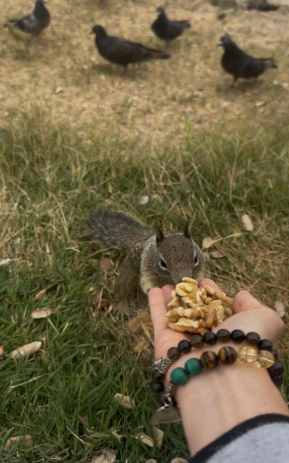
At ACT Foundation USA, we are committed to support those in need. Your contribution can make a huge impact—whether it’s a one-time donation or a recurring donation. Every donation helps us move closer to our goal.
You can donate directly by clicking any of the buttons below: